

Study Library Rules for Students: A Sample Rule Board
Key takeaways
- Clear written rules prevent most arguments in a study library.
- Keep the rule board short enough to read in a minute, and put the details in the admission form.
- Rules about silence, seats and fees matter most to students who pay for a quiet place.
- Share the rules at admission and ask each student to agree to them.
- Enforce rules the same way for everyone, starting with a polite warning.
Rules protect what students pay for: a quiet, reliable place to study. The sample below covers what most self-study libraries need. Use it as a starting point, write it out with your own details, and put it up at the entrance.
Sample rule board
Silence and phones
- Complete silence in the study hall. No whispering.
- Phones on silent. Take calls outside the hall.
- Use earphones for online lectures, at a volume others cannot hear.
Seats and shifts
- Sit only on your assigned seat, in your own shift.
- Arrive and leave within your shift timing. Staying late needs permission and may be charged.
- Clear your desk at the end of your shift, unless you have a full-day plan or a locker.
- Seat changes are made only at the desk.
Food and cleanliness
- No food inside the study hall. Water bottles are allowed.
- Eat only in the tea or break area.
- Keep your desk, the washroom and common areas clean.
Fees and membership
- Fees are due on [the 5th of each month, or your joining date]. Grace period: [3] days.
- Seats are released if fees remain unpaid after the grace period.
- Fees are not refunded for unused days, except [your policy].
- Your library login is personal. Do not share it.
Conduct and safety
- No guests inside the hall without permission.
- No smoking, alcohol or tobacco anywhere on the premises.
- Respect other students and staff. Harassment of any kind leads to immediate cancellation.
- The library is not responsible for belongings left unattended. Use a locker for valuables.
- CCTV is in use in common areas for everyone's safety.
Attendance
- Check in and check out every day, by QR scan or at the desk.
Tips for writing your rules
- Keep it to one page. Long rule boards are not read. Put the full fee and refund policy in the admission form.
- Use plain language, in Hindi and English if your students prefer.
- Be specific. "Fees due by the 5th" works. "Pay on time" does not.
- Give the reason for strict rules. "No calls inside, because the hall is silent" is accepted more easily than an order.
Enforcing rules fairly
- Start with a polite, private reminder.
- If it happens again, give a written warning and note it in the student's record.
- Cancel a membership only for serious or repeated breaches, and say in your rules how unused fees are handled in that case.
- Apply the same rules to everyone, including friends and long-time members. Students notice favouritism faster than anything else.
Rules for staff, too
- Greet students, and keep the desk area quiet.
- Never share a student's phone number or details with anyone.
- Record every fee payment and give a receipt.
- Check AC, lights, Wi-Fi, water and washrooms before the first shift.
How Libolink helps
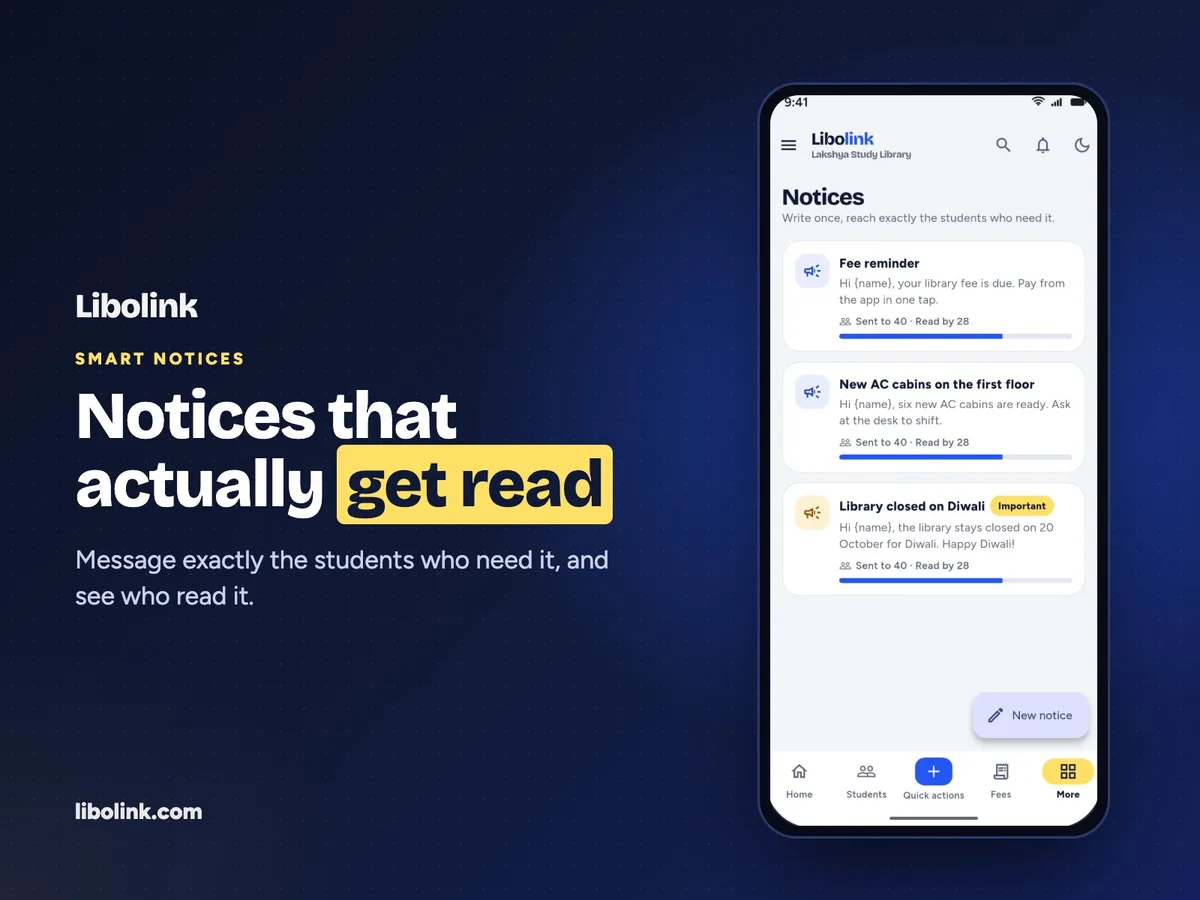
Libolink lets staff record warnings as discipline notes on a student's record, so repeat issues are handled the same way by everyone. Notices share a rule change with all students at once, and the Read by count shows who has seen it. Students can raise complaints from their app, for example about noise, so you hear about rule-breaking early. See the features or start a free trial.
Frequently asked questions
What rules should a study library have?
Most libraries need rules on silence and phones, assigned seats and shift timings, food, fees and the grace period, guests, smoking, conduct and attendance. Keep them to one page and share them at admission.
How do I handle students who break library rules?
Start with a polite private reminder, then a written warning noted on their record, and cancel only for serious or repeated breaches. Apply the same rules to everyone.
Should library rules be in Hindi or English?
Use the language your students read most comfortably. Many libraries print the rule board in both Hindi and English.